
Mold Inspection in Levittown, NY, Over a Radiant Heat Slab
You get an assessor's written finding on whether the damp in your Levittown floor is a leak in the slab's heating coils or moisture through the concrete, which decides whether a heating contractor comes before anyone else.
Mold Inspection quote in Levittown
Tell us the town, the lowest level of the house and where the damp is showing. In Nassau that is usually enough to say whether the water is coming up from the ground or out of the house, and which licensed trade the job needs.
Would you rather talk it through? Call (315) 640-3590.
$100 off your first job
Credited by us on your first booked job.
- One credit per customer per property, on your first booked job.
- Valid through December 31, 2026.
Mention this offer when you book. Full terms.
How Levittown's slabs were built, per the historical record

American Heritage magazine, in a 1993 history of Levittown, states that the houses stood on concrete slab foundations with no basements, and that copper coils in the slabs provided radiant heating.
Source: American Heritage, Alexander O. Boulton, The Buy of the Century (1993), accessed 2026-09-23
Heating trade author Dan Holohan writes that Levitt did not put a vapor barrier under the slab, and that when the copper tubing in the floors began to leak, the water soaked down into the ground instead of rising through the floor, so small leaks went unnoticed.
Source: HeatingHelp.com, Dan Holohan (trade author, secondary source), accessed 2026-09-23
USGS well N 12250, inside Levittown, measured the water table 24.39 feet below the surface on March 18, 25.61 feet on April 18 and 26.36 feet on June 6, 2016, and well N 1259 just east of it in Plainedge read 31.29 to 32.11 feet over the same months.
Source: U.S. Geological Survey, Water Data for the Nation, groundwater field measurements, accessed 2026-09-23
New York Labor Law section 945 requires the mold assessment licensee to prepare a written remediation plan before work starts, covering the work areas, quantities of material, methods, protective equipment, clearance procedures and criteria, occupant notices, an estimate of cost and time and, where possible, the underlying sources of moisture with the type of contractor who should fix them.
Source: New York State Senate, Consolidated Laws, Labor Law 945, accessed 2026-09-23
Finding the source in a Levittown slab
A Levittown assessment tells you where the moisture in the floor is coming from, how far across the slab it has spread and which trade the removal has to wait for. The original construction narrows the list. American Heritage's history of Levittown records that the houses stood on concrete slabs with no basements and that copper coils in the slabs provided radiant heat. When one of those coils leaks, the water is inside the concrete, and no amount of drying above it will stop it.
Tell the Levittown assessor about your floor heat
The single most useful thing you can tell the assessor is what has happened to the original heating. Is the slab system still running, was it abandoned when a new boiler or baseboard went in, or has it been partly repaired? Levitt skipped the vapor barrier beneath the slab, according to a heating trade author, and leaking coils drained down into the ground, so a small leak can run a long time unnoticed. USGS wells in and beside Levittown read the water table 24 to 32 feet down, so the answer lies in the slab or above it.
Floor heat on, off or gone
Say whether the coils still carry water. A live system that keeps losing pressure is a strong clue.
What covers the slab now
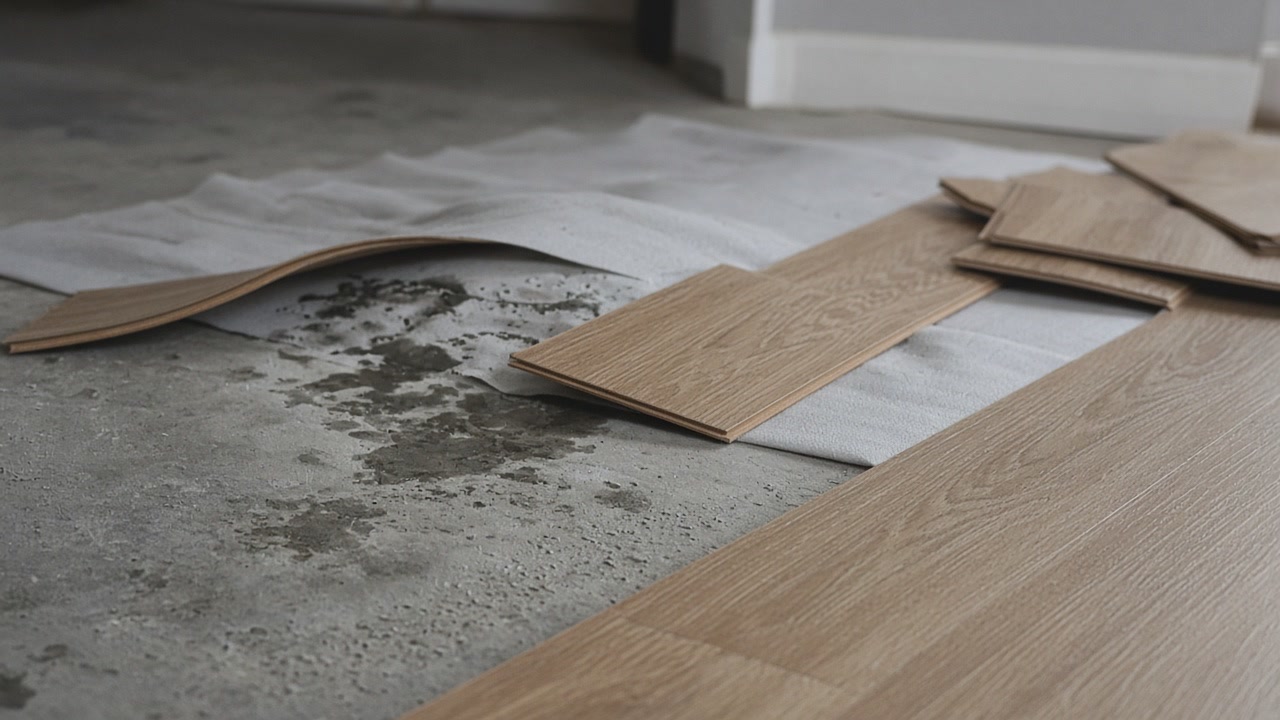
Carpet, vinyl and laminate each hide moisture differently. The assessor may need to lift a corner.
Any past heating repairs
An old invoice for a slab leak tells the assessor where to start measuring.
Damp floor over a Levittown radiant slab?
Say whether the floor heat still runs and where the damp shows, and an independent assessor can read the slab.
Removal and drying for a Levittown slab house
Levittown questions about damp floors and heating coils
My floor heat was replaced years ago. Can the old coils still leak?
If they were drained and abandoned, they should hold little water. If they were left filled or partly connected, tell the assessor, who will measure moisture across the slab to see whether the pattern follows the pipe runs.
Is the moisture groundwater?
Unlikely. The water table sat about 24 to 26 feet below the USGS well inside Levittown through spring 2016. Moisture in the slab is coming from the soil right under it, from a pipe in it or from the house above.
Get the Levittown slab read before the floor comes up
A few lines on the room and the heating are plenty to begin with.