
Mold in a Slab House With No Basement: Levittown-Era Homes in Nassau County
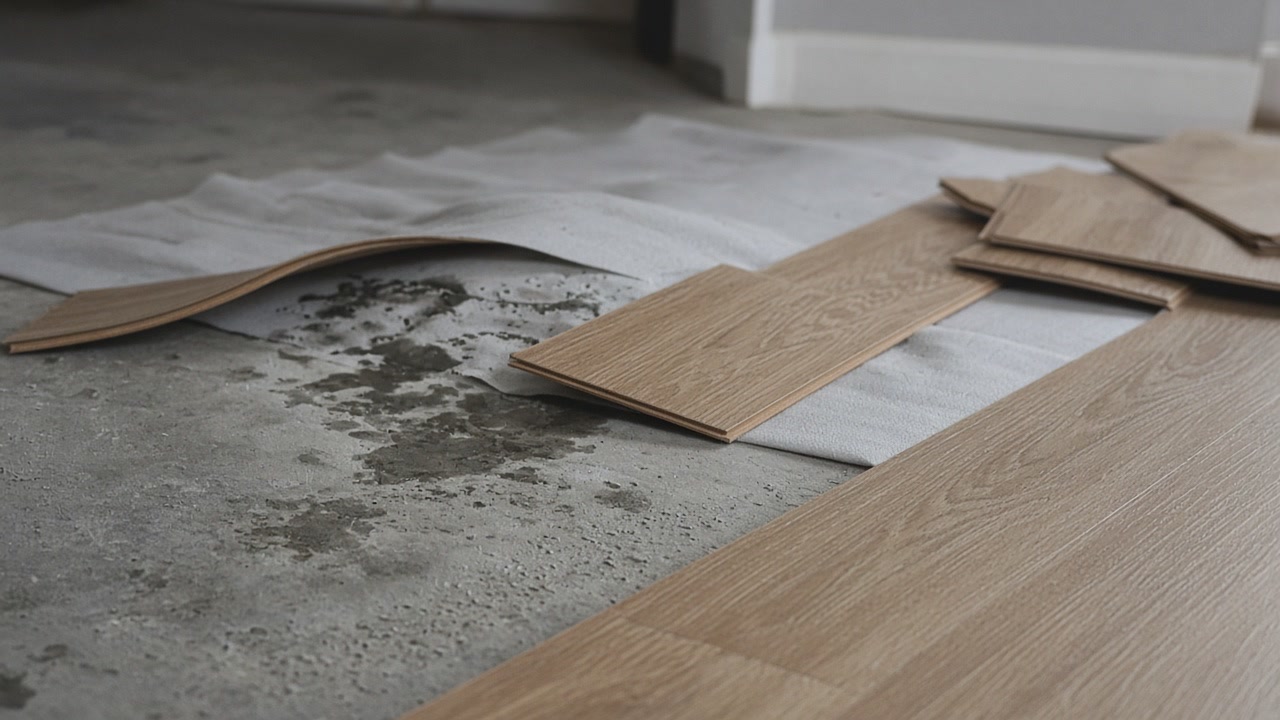
In a slab house it grows where the concrete meets the living space: under carpet, vinyl or laminate laid on the slab, on the bottom of drywall and baseboards that touch it, and on cold water pipes that sweat. With no basement to collect the moisture, the damp comes up into the rooms people live in.
Already know you need someone out? Call (315) 640-3590.
How these houses were built
If your house has no basement, the floor you walk on is the foundation, and that changes where moisture ends up. It is a very common arrangement here. Levitt and Sons built 17,447 houses in Levittown between 1947 and 1951, and the local zoning was changed in May 1947 to allow homes without cellars. A 1993 American Heritage history describes them standing on concrete slabs, with copper coils cast into the slab for radiant heat. Across the county, one home in three dates from the 1950s alone, so a great many Nassau families live directly on a slab of about that age.
Why the slab can be damp when the water table is far below
Under Levittown itself the groundwater is not close: a USGS well inside the hamlet read it between 24 and 26 feet down in spring 2016. The damp comes from the concrete and the fill under it. EPA describes concrete slabs as very porous and able to hold a great deal of water, and says water under floor tile on a slab may be liquid wicking up from the fill or vapor moving through the concrete. Modern practice lays plastic sheeting under a slab to act as the code-required vapor retarder and capillary break. One heating trade author, Dan Holohan, writes that Levitt did not lay one; that is a trade account, not a survey of every house, but it fits what the concrete does.
Where to look first in a house with no basement
Start low and start with anything sitting on the concrete. Lift a corner of carpet or pad in a closet, check the underside of any rug that has been down for years, and look at the bottom inch of drywall and the backs of baseboards along outside walls. Then check the cold water lines and anything that sweats: EPA advises acting quickly when moisture collects on pipes, walls or windows, and names rust as a sign that condensation is happening. A cheap humidity meter tells you a lot, because EPA puts the target below 60 percent indoor relative humidity, and ideally between 30 and 50.
The heating pipes in the floor
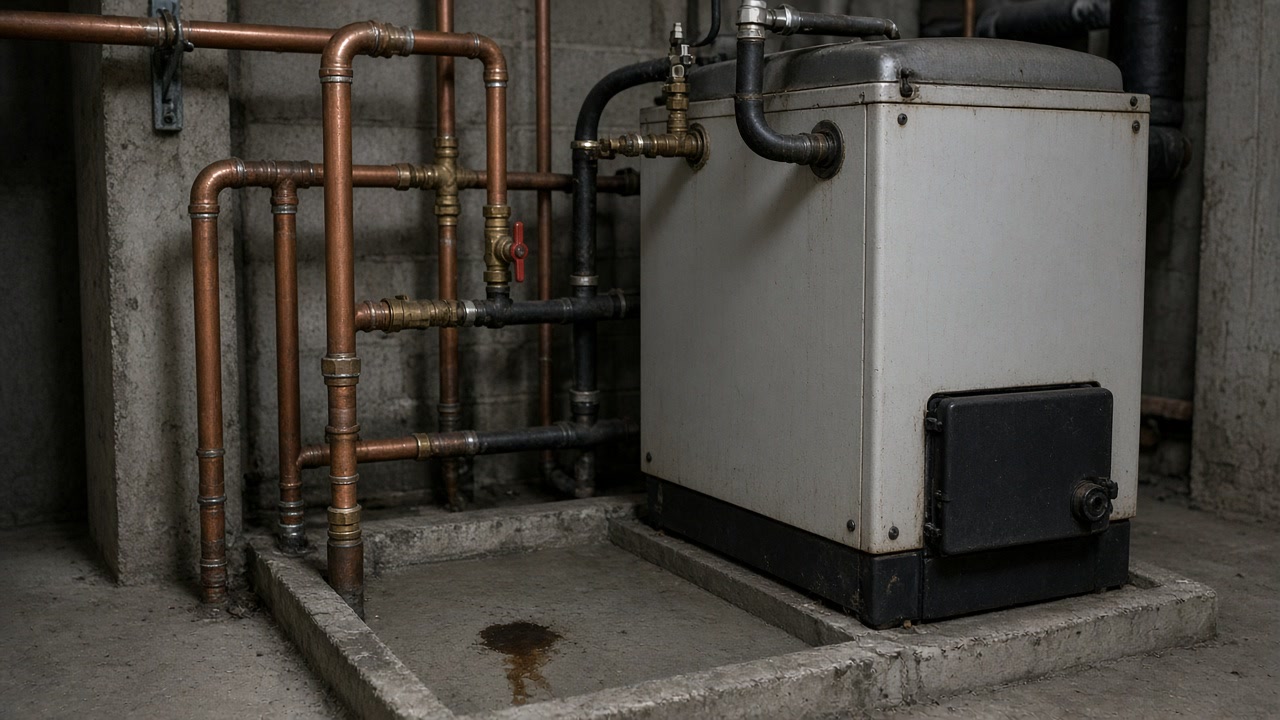
A slab with its heating cast inside it holds its own water supply, so a slab-house damp problem is not always about the ground at all. The same trade author writes that when the copper tubing in Levitt floors began to leak, the water soaked down into the ground rather than rising through the floor, so small leaks went unnoticed. We will not guess what is in your floor. The point is that a damp patch on a slab can have a plumbing or heating cause, and that is exactly the kind of source New York expects a mold assessor to try to identify before any cleanup is priced.
When you can deal with it yourself
A small patch is often yours to handle. EPA says a homeowner can in most cases clean a moldy area smaller than about 10 square feet, roughly three feet by three feet, and New York's mold licensing rules do not cover a homeowner doing the work in their own house. The state Department of Health also says that in most cases hiring a licensed assessor is not necessary. Fix the moisture first: dry the area, take up wet carpet and pad that cannot be dried, and bring the humidity down. If the growth comes back in the same place, the source is still there and cleaning again will not change that.
What an assessment adds in a slab house
Where the growth is larger, or keeps returning, the useful thing is a written answer to where the water is coming from. The state Department of Labor lists identifying the underlying moisture source among a licensed assessor's main duties, and says it should be corrected before cleanup or the mold will likely grow back. Under Labor Law section 945 the assessor's written plan names the work areas, the methods and, where possible, the moisture source and the type of contractor who should fix it. Tell us the town, that the house is on a slab, and where the damp shows, and we will set up that first visit.
Sources used in this guide
The Levittown Public Library records that Levitt and Sons built 17,447 houses in Levittown between 1947 and 1951, with building beginning on May 7, 1947 and the project ending on November 21, 1951.
Source: Levittown Public Library, Levittown History Collection, accessed 2026-09-23
The Levittown Public Library records that zoning laws were changed on May 27, 1947 to accommodate cellarless homes.
Source: Levittown Public Library, Levittown History Collection, accessed 2026-09-23
American Heritage magazine, in a 1993 history of Levittown, states that the houses stood on concrete slab foundations with no basements, and that copper coils in the slabs provided radiant heating.
Source: American Heritage, Alexander O. Boulton, The Buy of the Century (1993), accessed 2026-09-23
Of Nassau County's 479,044 housing units, 162,333, or 33.9 percent, were built in the 1950s alone, another 13.0 percent in the 1940s and 19.2 percent in 1939 or earlier, while only 7.3 percent date from 2000 or later.
Source: US Census Bureau, American Community Survey 2020-2024 5-year estimates, table B25034, accessed 2026-09-23
EPA states that masonry walls and concrete floor slabs are very porous and can hold a great deal of water, and that masonry and concrete must be thoroughly dry before being covered with water sensitive materials such as floor tile, carpeting, paint or paper faced gypsum board.
Source: US Environmental Protection Agency, Moisture Control Guidance for Building Design, Construction and Maintenance (2013), accessed 2026-09-23
In a photograph of floor tile lifting from a slab on grade, EPA explains that the water under the tile may be liquid water wicking up from the fill beneath the slab or water vapor migrating through the slab.
Source: US Environmental Protection Agency, Moisture Control Guidance for Building Design, Construction and Maintenance (2013), accessed 2026-09-23
EPA's moisture control guidance states that polyethylene film laid directly beneath a slab provides the code required water vapor retarder and forms a capillary break between the bottom of the slab and the fill below.
Source: US Environmental Protection Agency, Moisture Control Guidance for Building Design, Construction and Maintenance (2013), accessed 2026-09-23
USGS well N 12250, inside Levittown, measured the water table 24.39 feet below the surface on March 18, 25.61 feet on April 18 and 26.36 feet on June 6, 2016, and well N 1259 just east of it in Plainedge read 31.29 to 32.11 feet over the same months.
Source: U.S. Geological Survey, Water Data for the Nation, groundwater field measurements, accessed 2026-09-23
Heating trade author Dan Holohan writes that Levitt did not put a vapor barrier under the slab, and that when the copper tubing in the floors began to leak, the water soaked down into the ground instead of rising through the floor, so small leaks went unnoticed.
Source: HeatingHelp.com, Dan Holohan (trade author, secondary source), accessed 2026-09-23
EPA advises acting quickly when condensation or moisture collects on windows, walls or pipes, recommends covering cold surfaces such as cold water pipes with insulation, and names rust as an indicator that condensation occurs.
Source: US Environmental Protection Agency, A Brief Guide to Mold, Moisture and Your Home, accessed 2026-09-23
EPA recommends keeping indoor relative humidity below 60 percent, ideally between 30 and 50 percent, and notes that it can be checked with an inexpensive moisture or humidity meter sold at hardware stores.
Source: US Environmental Protection Agency, A Brief Guide to Mold, Moisture and Your Home, accessed 2026-09-23
EPA advises that a homeowner can in most cases clean a moldy area smaller than about 10 square feet, roughly a 3 foot by 3 foot patch, and that larger growth or extensive water damage calls for its remediation guidance.
Source: US Environmental Protection Agency, A Brief Guide to Mold, Moisture and Your Home, accessed 2026-09-23
The New York State Department of Labor lists four exemptions from mold licensing: a residential owner working on their own property; a non residential owner or employee working on an apartment building of four or fewer units they own; an owner, managing agent or full time employee working on commercial property or an apartment building of more than four units the owner owns, if they do not do mold work for the public; and government units working on property they own, manage or remediate.
Source: New York State Department of Labor, Mold Frequently Asked Questions, accessed 2026-09-23
The New York State Department of Health states that in most cases hiring a licensed mold assessment contractor is not necessary and most people can find and clean mold themselves, but that some choose a state licensed assessor to identify mold problems and their cause, and it advises checking that any remediation company is licensed by the Department of Labor.
Source: New York State Department of Health, publication 7287, accessed 2026-09-23
The New York State Department of Labor lists among a mold assessor's main duties identifying, when possible, the underlying source of moisture causing the growth, and says the remediation plan should state that source and how to remedy it, adding that the water source should always be corrected before cleanup or the mold will likely grow back.
Source: New York State Department of Labor, fact sheet: What to Expect When You Hire a Mold Assessor and Mold Remediation Contractor, accessed 2026-09-23
New York Labor Law section 945 requires the mold assessment licensee to prepare a written remediation plan before work starts, covering the work areas, quantities of material, methods, protective equipment, clearance procedures and criteria, occupant notices, an estimate of cost and time and, where possible, the underlying sources of moisture with the type of contractor who should fix them.
Source: New York State Senate, Consolidated Laws, Labor Law 945, accessed 2026-09-23
Services this guide relates to
Need someone to look at it?
Send the details and we will come back to you.