
Nassau County, from the North Shore to the South Shore
Mold Inspection in Nassau County, Before Anyone Sells You a Fix
Find out whether the water behind the mold is coming up from the ground or out of the house itself, and get the scope in writing before anyone quotes for removal.
Mold Inspection quote
Say where the mold or damp is, whether the house sits on a slab, a finished basement or a cellar, and roughly when you first noticed it. That is enough to line up the right licensed assessor.
Would you rather talk it through? Call (315) 640-3590.
$100 off your first job
Credited by us on your first booked job.
- One credit per customer per property, on your first booked job.
- Valid through December 31, 2026.
Mention this offer when you book. Full terms.
What a Nassau mold assessment settles before you spend on a fix
Most people call about the mold and end up needing an answer about the water. A licensed assessor walks the house, measures how far the damp material runs, works out whether the moisture is climbing from below or coming from somewhere inside, and puts it all in a written remediation plan: the areas, the quantities, the methods, the clearance criteria and, where it can be traced, the moisture source along with the kind of contractor who should repair it. Removal firms then price that plan, so every quote you collect describes one job instead of three different guesses. It matters more here than most places, because the ground under this county is not one condition. In spring 2016 one USGS well on Manhasset Neck found water 0.37 feet below the surface, and another about 1.3 miles away found it 165.27 feet down.
- A walkthrough that measures the affected area, because New York treats mold work over about ten square feet as a regulated project
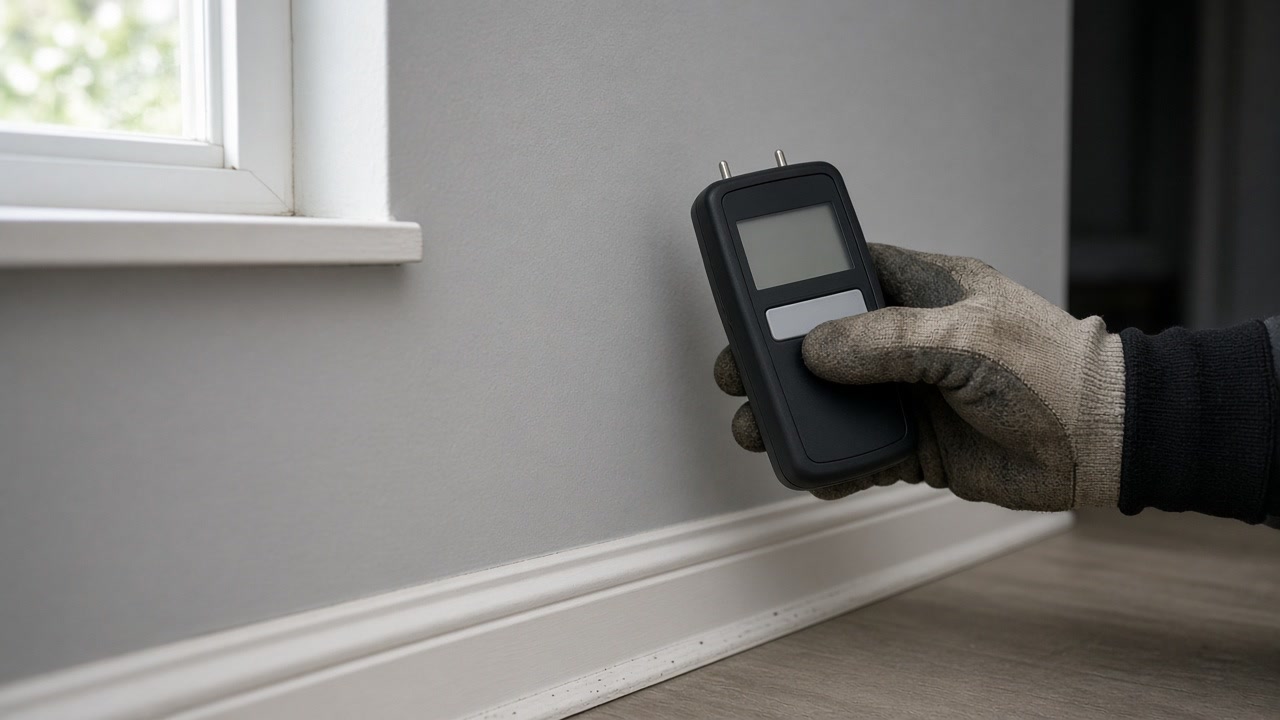
- Moisture mapping with pin and pinless meters and thermal imaging, to find how far the wet material runs past the visible growth
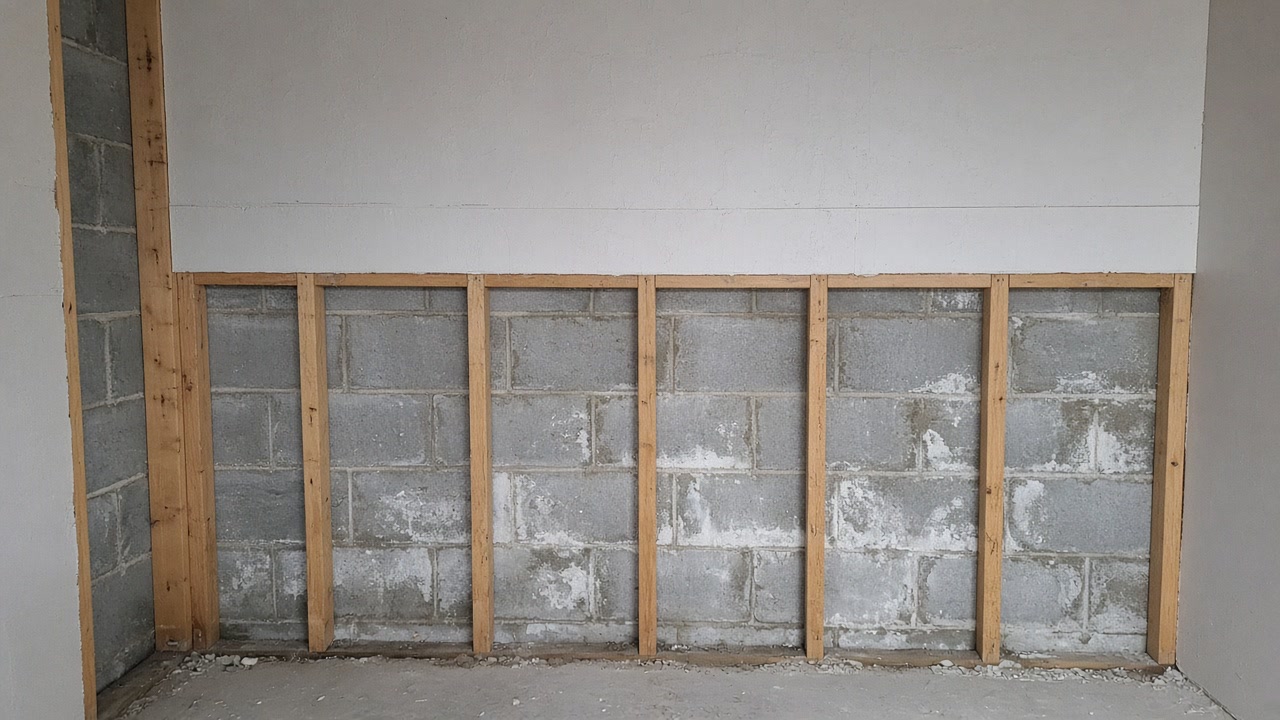
- Reading the lowest level of the house: slab on grade, finished basement or open cellar, and whether the damp sits low and even or gathers around a pipe, fixture or window
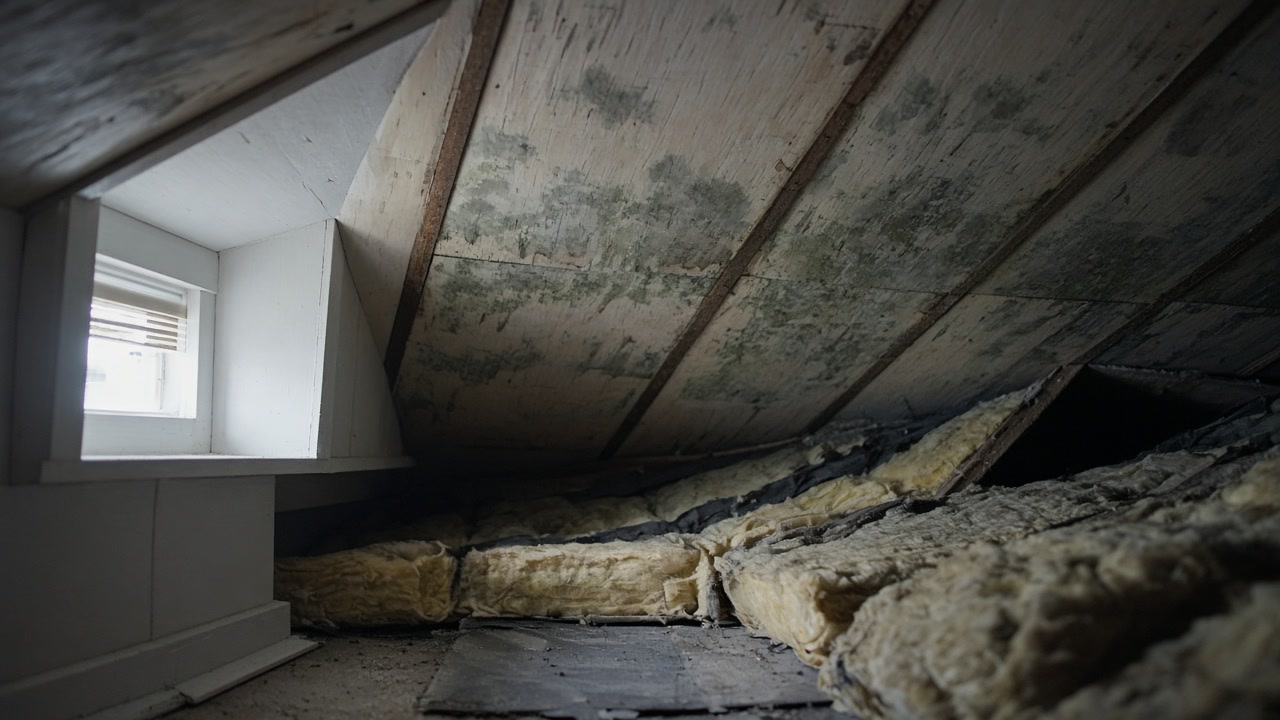
- Checking the sources inside the house: supply lines, heating tubing in a slab, gutters and downspouts, the slope of the yard, and condensation on cold pipes and walls
- Air or surface sampling only where a result would change the plan, such as a musty smell with no growth in sight
- A written remediation plan listing work areas, quantities, methods, protective equipment, containment and clearance criteria
- A post remediation assessment that checks the removal matched the plan and, as far as it can, that the moisture source was dealt with
What makes one Nassau mold assessment longer than another
An assessment grows with how well hidden the water is and how much of the house it may have reached. These are the things that change the visit.
Whether the lowest floor is a slab, a finished basement or an open cellar
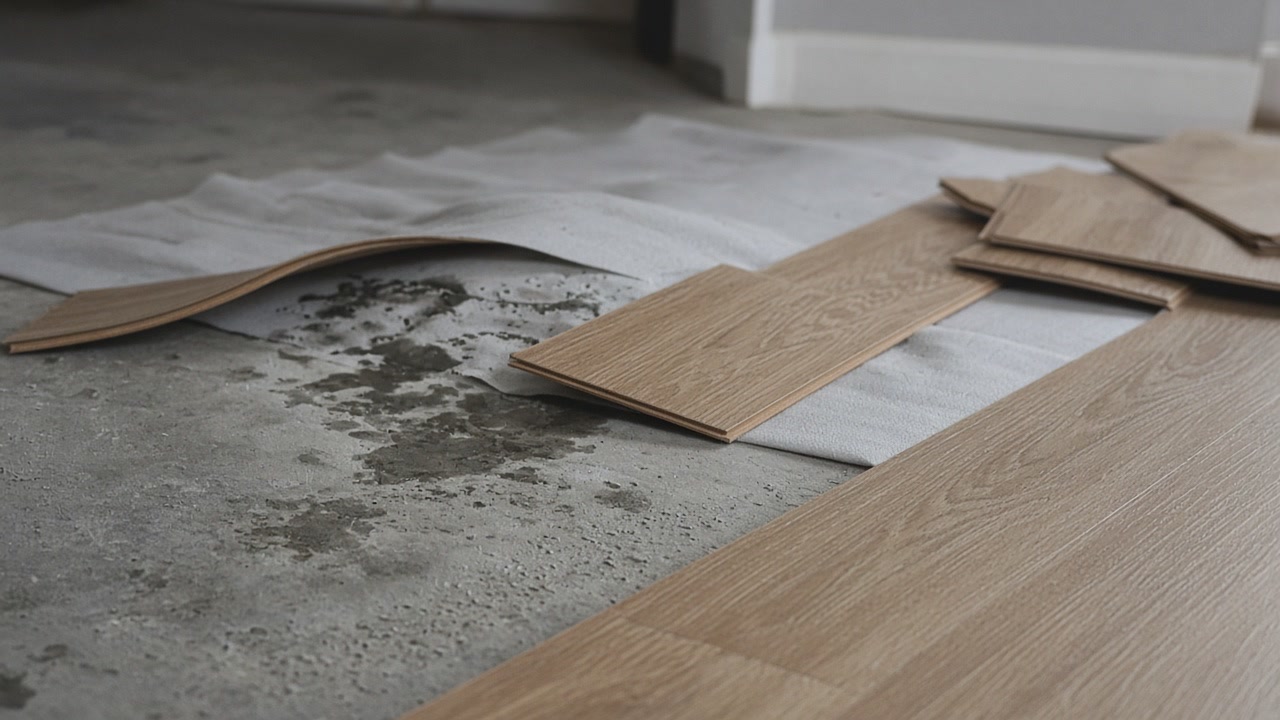
An open cellar wall can be read in minutes. Flooring laid over a slab hides its moisture underneath, and a finished basement hides it behind studs and drywall, so both usually need meters and sometimes a small inspection opening.
How far down the water table sits in that part of the county
USGS says substructure flooding is more likely where the water table is shallow. Its spring 2016 readings across the middle of the county ran from about 24 feet down in Levittown to 48 feet down in Westbury, and where the water is that deep, the assessor spends the visit on the house rather than the ground.
Whether heating or supply lines run under the floor
Levittown's houses were built with copper heating coils inside the slab, and a heating trade author notes that Levitt laid no vapor barrier beneath it, so leaking tubing drained downward and went unnoticed. A slow leak under concrete can feed damp at the slab edge for a long time before anything shows.
Whether the area is still wet today
Material that dried out after a single event is a cleanup. Material still reading wet means the source is live, and the New York State Department of Labor says the water source should always be corrected before cleanup or the growth will likely come back.
How many rooms the damp could have reached
A slab runs under every room on the floor and a basement wall runs the length of the house. Moisture under one floor covering is a reason to test the next room's before the plan is written.
Whether a sample would change any decision
The state labor department says sampling is rarely recommended, because some mold is always present and there is no state or national standard to compare a result with. Sampling adds time and cost, so it belongs only where the answer changes the plan.
Who has to read the report
A buyer, a seller's attorney, a landlord or an adjuster each want different things on paper. Census estimates put 18.1 percent of occupied Nassau homes as rented, so the person who found the mold is often not the person who approves the work.
Damp floor, and no idea where it is coming from?
Tell us the town, the lowest level of the house and where the damp shows. We will say whether an assessment is the right next step or whether this is a small patch you can clean yourself.
How a Nassau mold assessment moves from first visit to clearance
Start with the water story
The assessor asks when the damp first appeared, whether it follows rain, and what has already been cleaned, painted over or torn out. Half finished jobs are common, and what was removed matters as much as what is left.
Measure the growth and trace the wet material
Visible growth is measured against the ten square foot line in New York law, then meters and thermal imaging follow the damp material beyond it. This is usually the step where the size of the job changes.
Work out which way the water came
Damp that sits low and even along a basement wall after wet weather points to the ground. A wet patch that follows a pipe run, a bathroom above, a leaking fitting or a cold surface points to the house. The USGS depth map carries a stated error of plus or minus 5 feet at a regional scale, so the assessor reads this house, not a map.
Sample only where the result matters
The state health department says testing is neither recommended nor required for homes. A sample earns its place when there is a smell and no visible source, or when a dispute needs the condition on paper.
Write the remediation plan
Labor Law section 945 puts the plan before any work. It sets out the areas, quantities, methods, protective equipment, clearance procedures, occupant notices, an estimate of cost and time, and where possible the moisture source and the trade that should fix it. You then give that plan to the removal firms you are considering.
Come back once the removal is done
Under section 947 the assessor confirms the work area shows no visible mold, that the work followed the plan and, as far as it can tell, that the cause was fixed. If the cause is still there, it names the kind of contractor who can repair it.
What mold inspection looks like
When a Nassau homeowner can skip the assessment, and what it never includes
When you may not need this at all
- Under about ten square feet, roughly a 3 foot by 3 foot patch, the EPA says a homeowner can in most cases clean it themselves, and New York's mold licensing rules do not reach a project that small.
- Finding mold does not create a legal duty. The New York State Department of Labor says the presence of mold alone does not require an assessment or a remediation; the licensing rules apply once you decide to hire someone for a larger project.
- A homeowner working on their own house is exempt from mold licensing at any size, so you are allowed to find and clean it yourself.
- The state health department says most people do not need a licensed assessor and can find and clean mold themselves. If you can already see the growth and the cause is obvious, spend the money on fixing the water.
- If the water arrived in the last day or two and nothing has grown yet, drying is the job in front of you, and an assessment can wait.
- If you rent, the state health department's advice is to ask the landlord or superintendent to inspect and repair it, and to ask the local building department or code enforcement official to inspect if nothing happens.
What is out of scope
- Removing, cleaning or treating the mold. New York bars one licensee from both assessing and remediating the same property, and bars any person from owning an interest in both firms on that job.
- Repairing the moisture source. The plan names the trade needed, such as a plumber, a roofer or a grading contractor, and that trade does the repair.
- Waterproofing design, sump pump sizing or drainage engineering
- Cesspool, septic system or private well inspection, which are separate trades
- A verdict on a whole street or neighborhood. The assessment speaks to the house in front of the assessor.
- Medical advice. The county health department's own guidance is to see a physician about health concerns.
Independent mold assessors booked from the North Shore harbors to the South Shore
- Mold Inspection in Port Washington
- Mold Inspection in Manhasset
- Mold Inspection in Great Neck
- Mold Inspection in Glen Cove
- Mold Inspection in Sea Cliff
- Mold Inspection in Roslyn
- Mold Inspection in Syosset
- Mold Inspection in Hicksville
- Mold Inspection in Levittown
- Mold Inspection in Garden City
- Mold Inspection in Mineola
- Mold Inspection in Hempstead
- Mold Inspection in Elmont
- Mold Inspection in Massapequa
What Nassau owners ask before booking a mold assessment
Isn't a damp lower level on Long Island always groundwater?
Not in much of Nassau. USGS spring 2016 readings put the water table about 25 feet down in Garden City and Levittown and 47 feet down in Hicksville, while a few harbor edge wells on the North Shore read under 10 feet. Where the water is tens of feet below the floor, a damp slab or musty basement is usually being fed by the house: a line, a gutter, the grading or condensation. Where it is shallow, the ground is a real candidate. The assessment tells you which before you pay for a sump pump or a sealer.
Why must the assessor and the removal firm be different companies?
Because New York Labor Law section 936 says so. A licensee cannot perform both the assessment and the remediation on the same property, and the state labor department adds that a remediator handing you a fill in the blank assessment form breaks the same rule. The point is that the company writing the scope earns nothing from making it bigger.
Can I skip the assessment and just get a removal quote?
Not for a licensed project. The state labor department says a licensed remediator may not work without an assessment from a licensed assessor, even if the owner signs a waiver, and that removal estimates should not come before one. A quote written before the scope exists is a guess at what the job is.
Do I need a mold test?
Usually not. The New York State Department of Health answers no, saying testing is neither recommended nor required and there is no state or federal standard for mold in homes. It also notes that sampling can cost more than fixing the water problem. The assessment's value is the measurement, the moisture source and the written scope, not a lab number.
Will the Nassau County Department of Health inspect my house?
Its mold pages offer general guidance and a phone contact for questions. They describe no county mold licensing, testing, inspection or removal service. Mold licenses in New York come from the State Department of Labor under Labor Law Article 32.
How do I check an assessor is licensed?
Ask for the license, then look it up. The state labor department publishes its mold licenses as open data, and on the day we checked, the register listed 116 active assessment or remediation licenses at business addresses in ZIP codes beginning 110 or 115.
What does an assessment cost?
We do not set assessors' prices, and a number without your house in front of it would mislead you. What moves it is the size of the affected area, how much of the house has to be checked behind finishes, and whether any sampling is needed. The assessor tells you before the visit.
Book the assessment that comes before any quote
Describe what you can see or smell and which room it is in. We connect you with a licensed, independent assessor, and nothing is booked until you say yes.