
Water Damage Drying in Levittown, NY, Across a Slab Floor Plan
Get a Levittown leak extracted from every room it crossed and the slab dried and measured, so water that has nowhere to drain does not stay in the floor.
Water Damage Drying quote in Levittown
Tell us the town, the lowest level of the house and where the damp is showing. In Nassau that is usually enough to say whether the water is coming up from the ground or out of the house, and which licensed trade the job needs.
Would you rather talk it through? Call (315) 640-3590.
$100 off your first job
Credited by us on your first booked job.
- One credit per customer per property, on your first booked job.
- Valid through December 31, 2026.
Mention this offer when you book. Full terms.
Where water goes on a Levittown slab
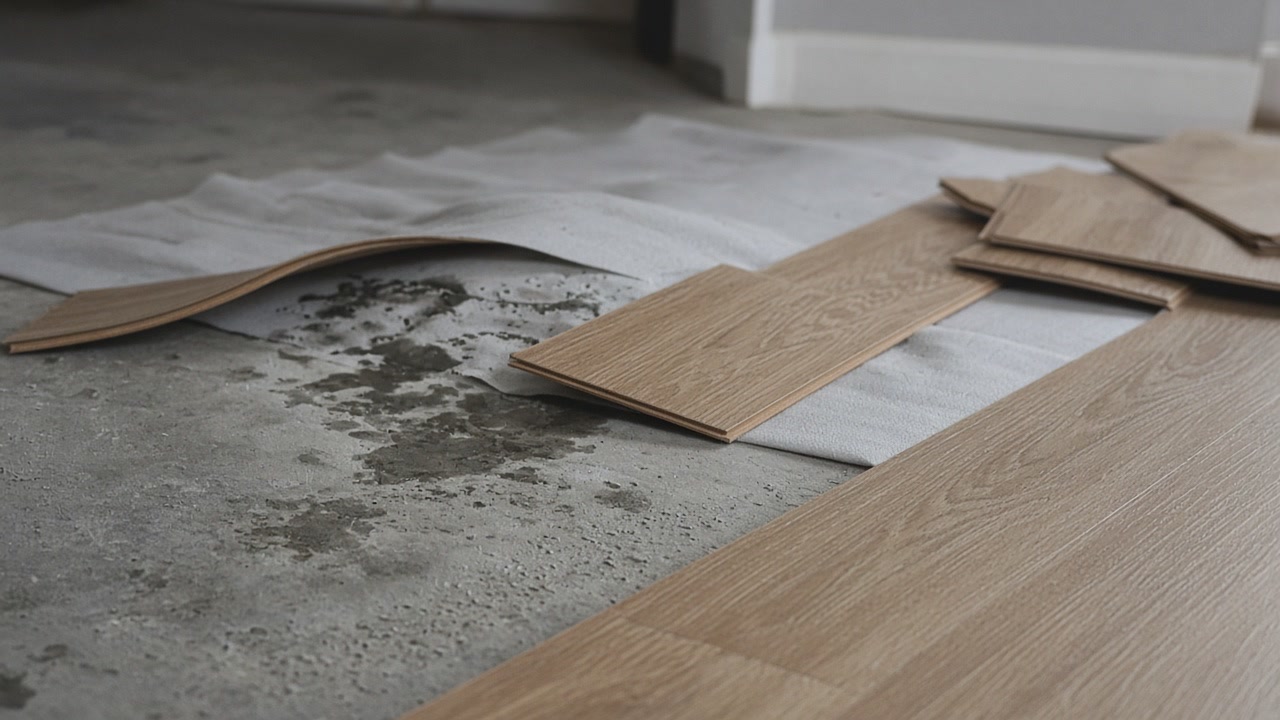
In a house with a basement, a burst line drains downward. In a Levittown house it spreads across the slab into the next room, soaking carpet, pad and the bottom of the walls as it goes. A drying crew extracts it, removes the material that cannot be dried and runs dehumidifiers with readings until the floor and walls are back to normal. The slab itself matters: EPA guidance treats a polyethylene sheet beneath the slab as the vapor retarder today's code requires, and by one heating trade author's account Levitt used none.

What water damage drying involves in Levittown
Levittown drying: the slab, the source and the clock
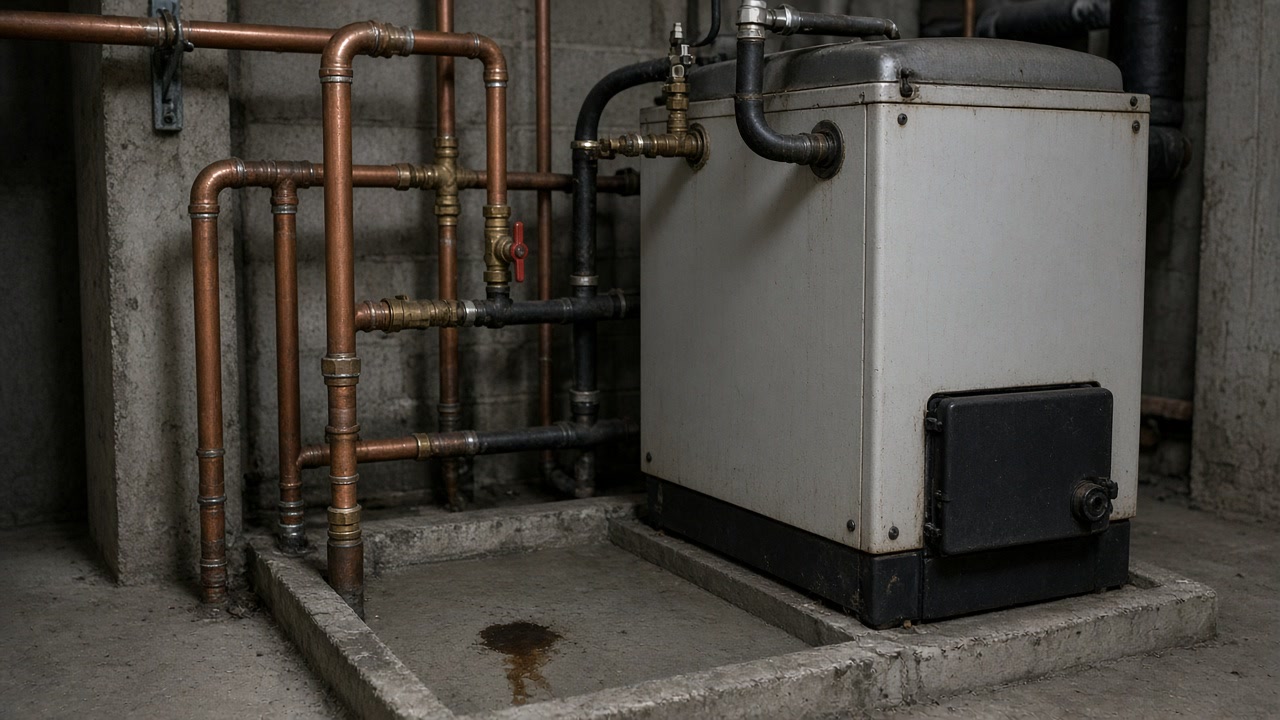
Work to the EPA's window of 24 to 48 hours for everything that got wet. Then insist on readings in the concrete, not just the carpet. A slab with no retarder under it can keep drawing moisture from the fill after the surface feels dry, and flooring put back too soon traps it. USGS wells in and beside Levittown read the water table 24 to 32 feet down, so the water that came in came from the house, and the plumber or heating contractor should repair it before the equipment goes.
Every room the water crossed
Follow it. Water on a slab runs under walls and into the next room's carpet.
Readings in the concrete
Ask for them at each visit and at the end. They decide when flooring can go back.
The line or coil that failed
Get it repaired first. Drying a slab that is still being wet from inside does not end.
Levittown's slab construction and water table depth
EPA's moisture control guidance states that polyethylene film laid directly beneath a slab provides the code required water vapor retarder and forms a capillary break between the bottom of the slab and the fill below.
Source: US Environmental Protection Agency, Moisture Control Guidance for Building Design, Construction and Maintenance (2013), accessed 2026-09-23
Heating trade author Dan Holohan writes that Levitt did not put a vapor barrier under the slab, and that when the copper tubing in the floors began to leak, the water soaked down into the ground instead of rising through the floor, so small leaks went unnoticed.
Source: HeatingHelp.com, Dan Holohan (trade author, secondary source), accessed 2026-09-23
USGS well N 12250, inside Levittown, measured the water table 24.39 feet below the surface on March 18, 25.61 feet on April 18 and 26.36 feet on June 6, 2016, and well N 1259 just east of it in Plainedge read 31.29 to 32.11 feet over the same months.
Source: U.S. Geological Survey, Water Data for the Nation, groundwater field measurements, accessed 2026-09-23
EPA advises that water damaged areas and items be dried within 24 to 48 hours to prevent mold growth, and states that if wet or damp materials are dried within that window after a leak or spill, in most cases mold will not grow.
Source: US Environmental Protection Agency, A Brief Guide to Mold, Moisture and Your Home, accessed 2026-09-23
Water spreading across a Levittown slab?
Close the valve and trace which rooms it crossed. A licensed crew for the slab is the next step we arrange.
Assessment and removal for a wet Levittown slab
Levittown questions while the slab dries
Will a dehumidifier alone dry the slab?
For a small, clean spill caught fast, it may. For a leak that soaked carpet and ran under walls, extraction and measured drying are what stop it becoming a mold job.
Could the water be coming up from the ground?
Not from the water table, which sits a couple of dozen feet below the slab in Levittown. Moisture can wick up from the soil right beneath the concrete, which is a slab problem rather than a groundwater one.
Get the Levittown slab dried and measured
Describe the leak and where it went. Asking is not a commitment.