
Why There Is Mold Under the New Floor on an Old Nassau County Slab
Usually because moisture coming up through the concrete had nowhere to go once the new floor covered it. EPA warns that a covering laid on concrete giving off more water vapor than the maker allows can fail and promote mold growth, and it recommends measuring the slab before the floor goes down, even when the house is decades old.
Already know you need someone out? Call (315) 640-3590.
Before the replacement floor goes down
Take up the damaged covering
You, or a licensed remediator if the area is over 10 square feetPorous material with extensive growth, such as carpet and pad, is discarded rather than cleaned.
Find the source
A licensed mold assessor, where one is neededVapor through the slab, a leak under it, or a one-off spill are different jobs with different fixes.
Dry and correct the moisture
The trade the source calls forEPA says concrete must be thoroughly dry before it is covered with water sensitive materials.
Measure the slab, then lay the floor
The flooring installerEPA recommends measuring the vapor emission rate before any covering goes down.
Fixing the moisture comes before the covering, or the same growth returns under the next one.
What changed when the new floor went down
The slab was probably giving off moisture long before the renovation; the new floor simply stopped it escaping. EPA calls concrete slabs very porous and able to hold a great deal of water, and says water found under tile on a slab may be liquid wicking up from the fill below or vapor moving through the concrete itself. While the concrete was bare or lightly covered, that moisture left into the room air and nobody noticed. A tight covering puts a lid on it, and the underside of the floor, the pad or the adhesive layer stays damp enough for growth.
Why it happens in a house nowhere near the water table
This is a problem of the concrete, not of groundwater, which is why it turns up in the middle of the county where the water is well below the floor. A USGS well inside Hicksville read the water table more than 47 feet down in April 2016, and 57.8 percent of Hicksville's homes were built in the 1950s. A slab of that era may have nothing under it to stop moisture rising from the fill. Today EPA describes plastic sheeting under a slab as the code-required vapor retarder and capillary break. So a sump pump or a groundwater fix does nothing for mold under a new floor: the water is coming through the slab you are standing on.
The test that should come before the flooring
EPA's moisture guidance is direct about this. Installing a floor covering on concrete whose vapor emission rate is above the manufacturer's maximum may cause the covering to fail, promote mold growth and void the warranty, and EPA recommends measuring the emission rate before coverings are installed, even long after the building was built. If the old floor has already come up, that measurement belongs before the replacement goes down, not after. It is also worth reading the flooring maker's installation instructions for the limit they set, since that number is what the warranty turns on.
Is it the slab, or a leak under the floor?
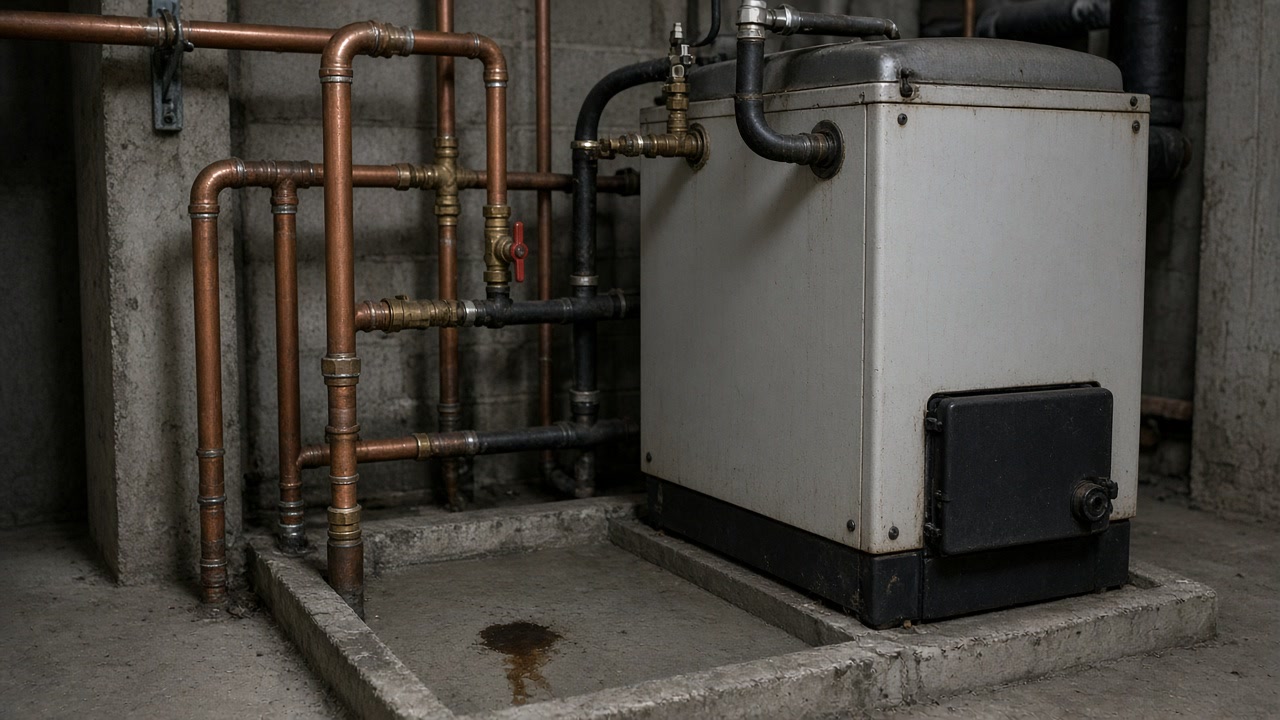
From the top it can be hard to tell, and the answer changes the fix. EPA says that when wet materials are dried within 24 to 48 hours of a leak or spill, in most cases mold will not grow, so growth under a floor that never had a spill points at a continuing source rather than one bad afternoon. That source can be the slab, or it can be a supply or heating line under or beside it. Identifying which is one of a licensed assessor's listed duties under the state Department of Labor, and New York expects the water source corrected before cleanup, or the growth will likely return.
Do you need a contractor for this?
Not always. EPA says a homeowner can usually clean up growth covering less than about 10 square feet, and New York's licensing law only applies to a mold project larger than 10 square feet in any case, with an exemption for a homeowner doing their own work. Taking up a few planks, discarding wet pad and cleaning a small patch is work many people do themselves. The state Department of Health's cleanup order is worth following: control the moisture first, then throw out porous materials with extensive growth such as carpet, and anything wet that cannot be dried thoroughly.
Before the next floor goes down
Relaying the same floor on the same damp slab buys you the same result. If the affected area is large or you want it handled professionally, a licensed assessor's written plan under Labor Law section 945 sets out the work areas and methods and, where possible, the moisture source and the type of contractor to fix it, and a separate licensed firm does the removal. Tell us the town, what kind of floor went down and roughly when, and we will line up the right first visit.
Sources used in this guide
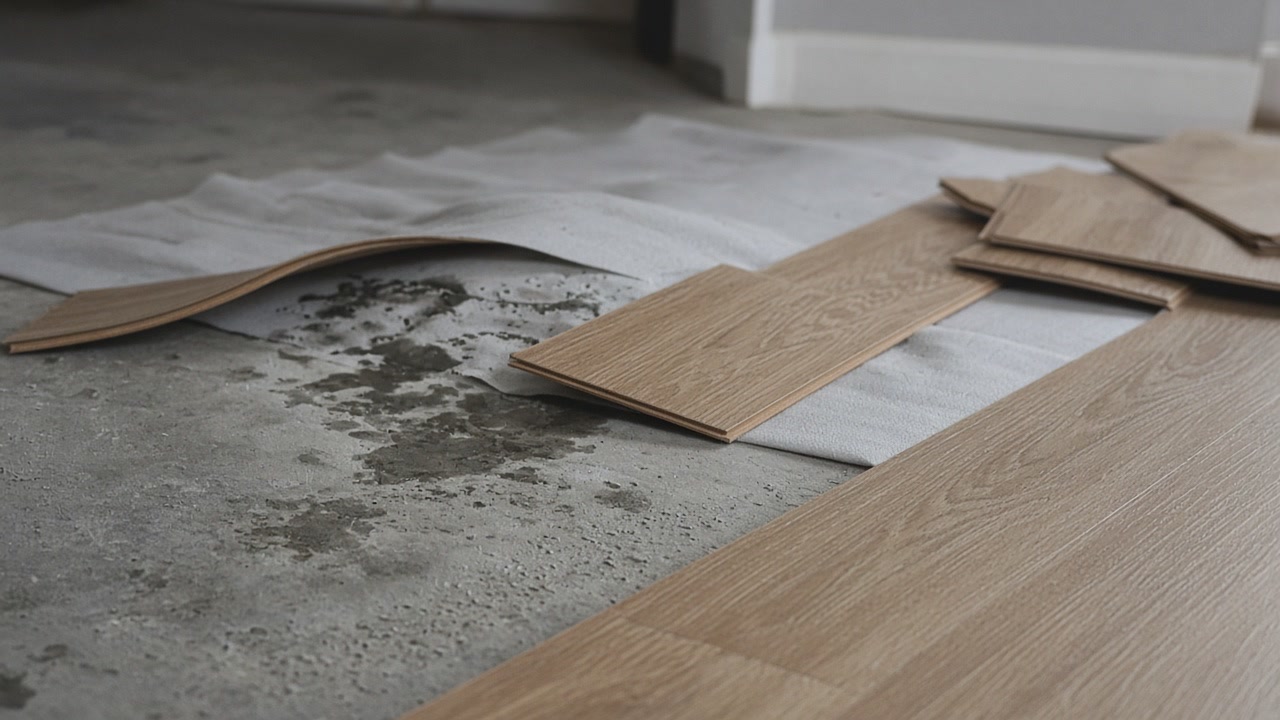
EPA states that installing a floor covering on concrete whose water vapor emission rate exceeds the manufacturer's maximum may cause the covering to fail, promote mold growth and void the warranty, and recommends measuring the vapor emission rate before coverings are installed, even long after the building was built.
Source: US Environmental Protection Agency, Moisture Control Guidance for Building Design, Construction and Maintenance (2013), accessed 2026-09-23
EPA states that masonry walls and concrete floor slabs are very porous and can hold a great deal of water, and that masonry and concrete must be thoroughly dry before being covered with water sensitive materials such as floor tile, carpeting, paint or paper faced gypsum board.
Source: US Environmental Protection Agency, Moisture Control Guidance for Building Design, Construction and Maintenance (2013), accessed 2026-09-23
In a photograph of floor tile lifting from a slab on grade, EPA explains that the water under the tile may be liquid water wicking up from the fill beneath the slab or water vapor migrating through the slab.
Source: US Environmental Protection Agency, Moisture Control Guidance for Building Design, Construction and Maintenance (2013), accessed 2026-09-23
EPA's moisture control guidance states that polyethylene film laid directly beneath a slab provides the code required water vapor retarder and forms a capillary break between the bottom of the slab and the fill below.
Source: US Environmental Protection Agency, Moisture Control Guidance for Building Design, Construction and Maintenance (2013), accessed 2026-09-23
USGS well N 1197, inside Hicksville, measured the water table 47.35 feet below the surface on April 18, 2016.
Source: U.S. Geological Survey, Water Data for the Nation, groundwater field measurements, accessed 2026-09-23
Census estimates for 2020 to 2024 count 13,565 housing units in Hicksville, 57.8 percent of them built in the 1950s and 81.5 percent before 1960, with 93.4 percent single detached houses, a median year built of 1955 and 39.7 percent of homes heating with fuel oil.
Source: US Census Bureau, American Community Survey 2020-2024 5-year estimates, Hicksville CDP, tables B25034, B25035, B25003, B25024 and B25040, accessed 2026-09-23
EPA advises that water damaged areas and items be dried within 24 to 48 hours to prevent mold growth, and states that if wet or damp materials are dried within that window after a leak or spill, in most cases mold will not grow.
Source: US Environmental Protection Agency, A Brief Guide to Mold, Moisture and Your Home, accessed 2026-09-23
The New York State Department of Labor lists among a mold assessor's main duties identifying, when possible, the underlying source of moisture causing the growth, and says the remediation plan should state that source and how to remedy it, adding that the water source should always be corrected before cleanup or the mold will likely grow back.
Source: New York State Department of Labor, fact sheet: What to Expect When You Hire a Mold Assessor and Mold Remediation Contractor, accessed 2026-09-23
EPA advises that a homeowner can in most cases clean a moldy area smaller than about 10 square feet, roughly a 3 foot by 3 foot patch, and that larger growth or extensive water damage calls for its remediation guidance.
Source: US Environmental Protection Agency, A Brief Guide to Mold, Moisture and Your Home, accessed 2026-09-23
Section 930 of the New York Labor Law defines a mold project as mold remediation, assessment or abatement of an area greater than ten square feet, excluding routine cleaning and construction, maintenance, repair or demolition done for purposes other than mold work, and defines mold assessment as an inspection designed to discover mold or conditions that facilitate it.
Source: New York State Senate, Consolidated Laws, Labor Law 930, accessed 2026-09-23
The New York State Department of Labor lists four exemptions from mold licensing: a residential owner working on their own property; a non residential owner or employee working on an apartment building of four or fewer units they own; an owner, managing agent or full time employee working on commercial property or an apartment building of more than four units the owner owns, if they do not do mold work for the public; and government units working on property they own, manage or remediate.
Source: New York State Department of Labor, Mold Frequently Asked Questions, accessed 2026-09-23
The New York State Department of Health lists the first step of mold cleanup as controlling the moisture problem by finding and correcting its source, then discarding porous materials with extensive growth such as drywall, carpeting, paper and ceiling tiles, and discarding any wet material that cannot be cleaned and dried thoroughly.
Source: New York State Department of Health, publication 7287, accessed 2026-09-23
New York Labor Law section 945 requires the mold assessment licensee to prepare a written remediation plan before work starts, covering the work areas, quantities of material, methods, protective equipment, clearance procedures and criteria, occupant notices, an estimate of cost and time and, where possible, the underlying sources of moisture with the type of contractor who should fix them.
Source: New York State Senate, Consolidated Laws, Labor Law 945, accessed 2026-09-23
Services this guide relates to
Need someone to look at it?
Send the details and we will come back to you.