
Wet Basement on High Ground: North Shore and Moraine Homes in Nassau County
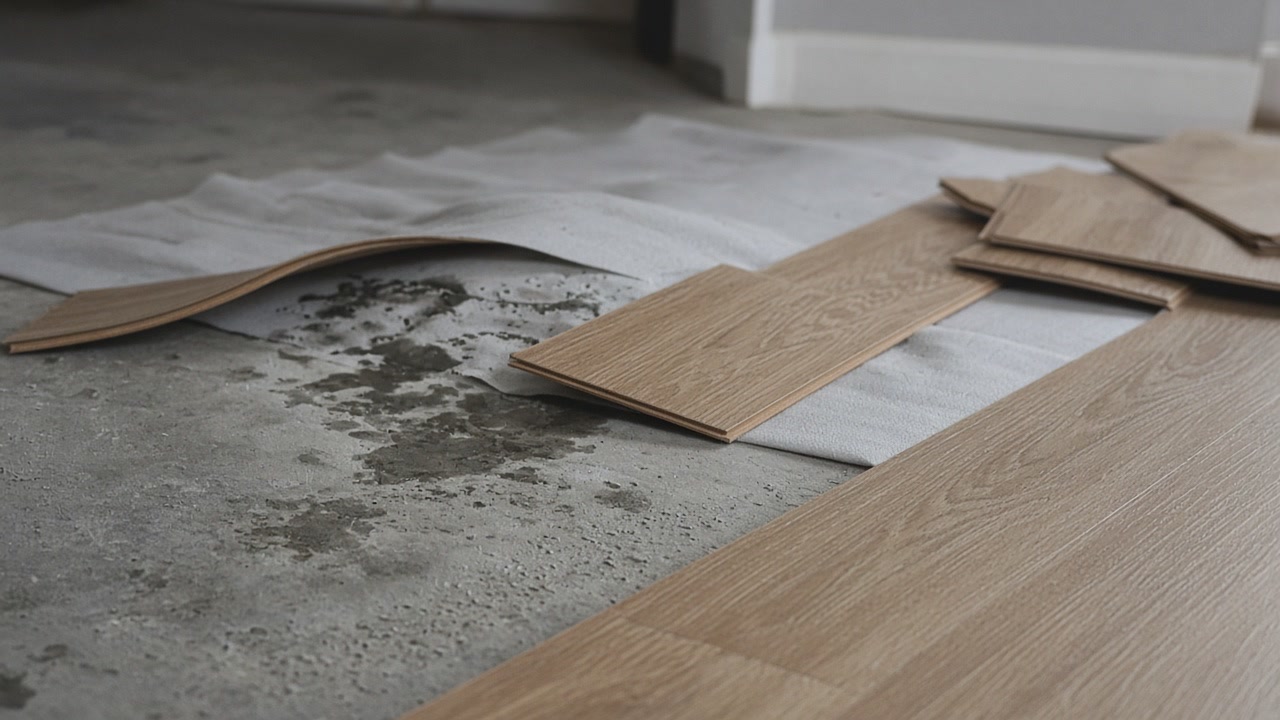
Because on high ground the water is rarely rising from the water table; it is coming from the house and the rain around it: roof runoff and grading that send water at the foundation, humid air condensing on cold walls and cold water pipes, and leaks inside the house. Under the county's hills USGS measured the water table tens of feet down in spring 2016, and more than 160 feet at one Syosset well.
Already know you need someone out? Call (315) 640-3590.
How far down the water was under the hills
If your house sits up a slope, the first useful fact is that groundwater is probably not your problem, which saves money before anything is spent. USGS read a Glen Cove well at about 154 feet above sea level and found the water table 104.57 feet down in April 2016, a Manhasset well at about 96 feet elevation read 66.21 feet down, and a Syosset well read nearly 165 feet. The exception is the bottom of the slope: on the North Shore, every USGS well with water within 10 feet of the surface stood at 18 feet above sea level or lower, at the harbor and Sound edges.
Rain, gutters and the ground around the house
One outside source is ordinary rain landing close to the walls. EPA advises cleaning and repairing gutters regularly and making sure the ground slopes away from the foundation so water does not collect around it. On the ridge there is a little more of it to manage: NOAA's 1991 to 2020 normals give the Syosset station 47.73 inches of precipitation a year, more than the 45.33 inches at Mineola in the center of the county. Walk the outside after a downpour and look for overflowing gutters, downspouts ending at the wall, and soil or paving that tips toward the house.
Condensation on cold concrete and cold pipes
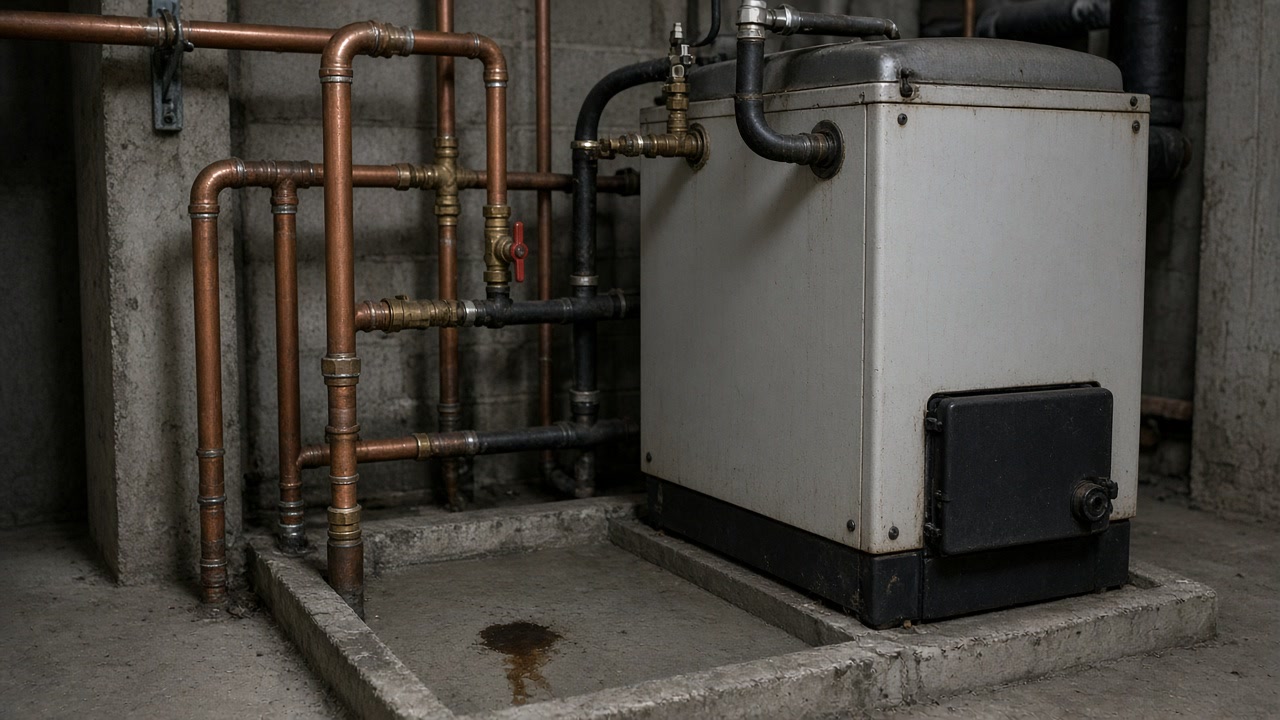
A basement that is damp in summer and dry in winter is often making its own water. Humid air meets concrete walls and cold water lines that stay cooler than the room, and moisture condenses on them. EPA advises acting quickly when moisture collects on walls, windows or pipes, recommends insulating cold surfaces such as cold water pipes, and names rust as a sign that condensation occurs. A humidity meter from a hardware store settles a lot: EPA puts the target below 60 percent indoors, ideally 30 to 50. If the reading is high and the walls are only wet on the surface, the air is the likely source.
Leaks inside the house
Much of the North Shore housing is old. Manhasset's median home was built in 1942, and nearly half of its homes date from 1939 or earlier, so basements there carry decades of supply lines, drains and heating pipes. A leak from any of them looks like groundwater to someone expecting groundwater. The state Department of Labor lists finding the underlying moisture source among a licensed assessor's main duties, and that is the step that tells an old pipe from wet soil. One more source matters here: many North Shore homes still use their own cesspool or septic system, and a backup is a different and dirtier water, so say so when you describe the problem.
What not to buy first
A sump pump works by pulling water from under the floor, so it earns its place where the water table is close to that floor. USGS ties potential substructure flooding to the shallow areas on its depth map, and on the hills the table is tens of feet down. A pump there has little to pull, and an interior sealer painted over a wall that is wet from a gutter or a sweating pipe does not stop the water arriving. Price those fixes after the source is known, not before.
What you can check yourself this week
You may not need anyone. Clean the gutters, extend downspouts away from the walls, check the slope of the soil and paving, insulate cold water lines that drip, and run a dehumidifier while watching the humidity meter. EPA says a homeowner can usually clean up growth covering less than about 10 square feet, and the state Department of Health says most people do not need a licensed assessor. If the damp comes back after all of that, or the growth is larger than a small patch, tell us the town, whether the house sits up the slope or near the water, and where the wet shows.
Sources used in this guide
USGS well N 1152, inside the City of Glen Cove at about 154 feet above sea level, measured the water table 104.57 feet below the surface on April 22, 2016, and well N 5250 at 123 feet read 70.50 feet down.
Source: U.S. Geological Survey, Water Data for the Nation, groundwater field measurements, accessed 2026-09-23
USGS well N 9897, inside Manhasset at a land elevation of about 96 feet, measured the water table 66.21 feet below the surface on April 18, 2016.
Source: U.S. Geological Survey, Water Data for the Nation, groundwater field measurements, accessed 2026-09-23
USGS well N 1228, inside Syosset at about 227 feet above sea level, measured the water table between 164.83 and 164.88 feet below the surface in three readings from March to May 2016.
Source: U.S. Geological Survey, Water Data for the Nation, groundwater field measurements, accessed 2026-09-23
On the moraine ridge in the northwest of the county, USGS water table wells read 141.40 to 141.82 feet down in Lake Success and 122.79 feet down in University Gardens in spring 2016, and a well inside Syosset at 227 feet above sea level read 164.83 to 164.88 feet down.
Source: U.S. Geological Survey, Water Data for the Nation, groundwater field measurements, accessed 2026-09-23
In the spring 2016 USGS readings from North Shore Nassau water table wells, every well with water less than 10 feet below the surface stood at a land elevation of 18 feet or lower, at the harbor and Sound edges, including readings of 6.12 and 7.80 feet in Kings Point, 7.34 feet in Sands Point and 7.77 feet in Baxter Estates. Wells farther up the slopes read tens of feet.
Source: U.S. Geological Survey, Water Data for the Nation, groundwater field measurements, accessed 2026-09-23
EPA advises cleaning and repairing roof gutters regularly and making sure the ground slopes away from the building foundation so water does not enter or collect around it.
Source: US Environmental Protection Agency, A Brief Guide to Mold, Moisture and Your Home, accessed 2026-09-23
NOAA's 1991 to 2020 normals for the Syosset station, at about 265 feet above sea level, give 47.73 inches of precipitation a year, more than Mineola's 45.33; the station publishes no temperature or snowfall normals.
Source: NOAA National Centers for Environmental Information, U.S. Climate Normals 1991-2020, annual and seasonal, station USC00308577 Syosset, accessed 2026-09-23
NOAA's 1991 to 2020 normals for the Mineola station in central Nassau give 45.33 inches of precipitation a year, 11.0 days a year with an inch or more, 30.7 days with half an inch or more, 18.5 inches of snow, 83.0 nights at or below freezing and 16.3 days reaching 90 degrees or higher.
Source: NOAA National Centers for Environmental Information, U.S. Climate Normals 1991-2020, annual and seasonal, station USC00305377 Mineola, accessed 2026-09-23
EPA advises acting quickly when condensation or moisture collects on windows, walls or pipes, recommends covering cold surfaces such as cold water pipes with insulation, and names rust as an indicator that condensation occurs.
Source: US Environmental Protection Agency, A Brief Guide to Mold, Moisture and Your Home, accessed 2026-09-23
EPA recommends keeping indoor relative humidity below 60 percent, ideally between 30 and 50 percent, and notes that it can be checked with an inexpensive moisture or humidity meter sold at hardware stores.
Source: US Environmental Protection Agency, A Brief Guide to Mold, Moisture and Your Home, accessed 2026-09-23
Census estimates for 2020 to 2024 count 2,871 housing units in Manhasset with a median year built of 1942, older than every Nassau place in this ledger except Sea Cliff and Floral Park, and 47.3 percent built in 1939 or earlier.
Source: US Census Bureau, American Community Survey 2020-2024 5-year estimates, Manhasset CDP, tables B25034, B25035, B25003, B25024 and B25040, accessed 2026-09-23
The New York State Department of Labor lists among a mold assessor's main duties identifying, when possible, the underlying source of moisture causing the growth, and says the remediation plan should state that source and how to remedy it, adding that the water source should always be corrected before cleanup or the mold will likely grow back.
Source: New York State Department of Labor, fact sheet: What to Expect When You Hire a Mold Assessor and Mold Remediation Contractor, accessed 2026-09-23
The USGS map of depth to the water table beneath Long Island for April and May 2016 marks the shallow areas in red and states that those are the areas where potential substructure flooding is more likely.
Source: U.S. Geological Survey, Scientific Investigations Map 3398 (Como and others, 2018), accessed 2026-09-23
The same 2015 county release states that most homeowners in Glen Cove, Roslyn and Port Washington are connected to public sewers, but that in sections of Glen Cove, Sea Cliff, Glenwood Landing, Glen Head, Roslyn Harbor, Flower Hill and Sands Point homes have their own cesspool or septic system.
Source: Nassau County Legislature press release, June 2, 2015, accessed 2026-09-23
The Nassau County Soil and Water Conservation District states that approximately 40,000 residential properties on the North Shore of Nassau County are served by cesspools and septic systems, and that a county grant program helps eligible owners replace them with nitrogen reducing systems.
Source: Nassau County Soil and Water Conservation District, accessed 2026-09-23
EPA advises that a homeowner can in most cases clean a moldy area smaller than about 10 square feet, roughly a 3 foot by 3 foot patch, and that larger growth or extensive water damage calls for its remediation guidance.
Source: US Environmental Protection Agency, A Brief Guide to Mold, Moisture and Your Home, accessed 2026-09-23
The New York State Department of Health states that in most cases hiring a licensed mold assessment contractor is not necessary and most people can find and clean mold themselves, but that some choose a state licensed assessor to identify mold problems and their cause, and it advises checking that any remediation company is licensed by the Department of Labor.
Source: New York State Department of Health, publication 7287, accessed 2026-09-23
Services this guide relates to
Need someone to look at it?
Send the details and we will come back to you.